In the I/DD field, written records are essential for tracking services and meeting compliance standards.
However, when it comes to person‑centered practices, text‑based documentation has its limits.
Nuances like
unique communication styles or specialized support techniques can be difficult to convey in writing, and
traditional paperwork rarely captures the direct voices and perspectives of the people receiving services.
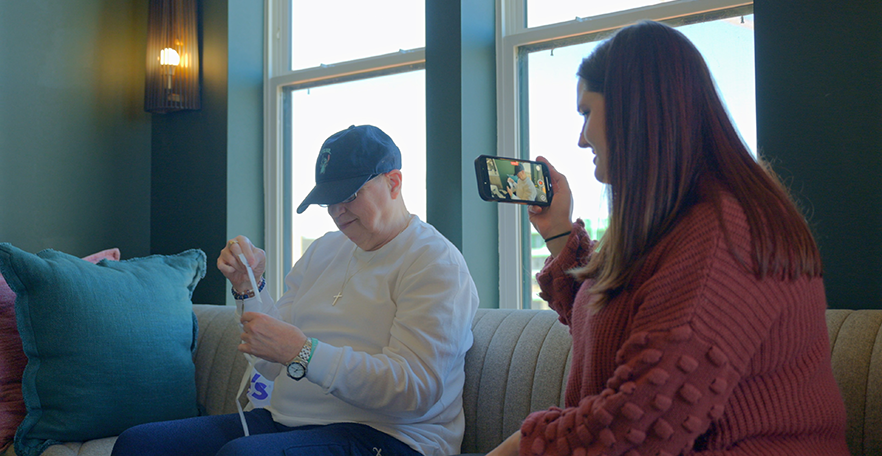
Recognizing these gaps, Therap developed a Secure Video
Documentation tool within its electronic
documentation system, giving providers a reliable way to enrich their written records with dynamic videos
that bring person‑centered practices to life.
Richmond
Residential
Services, Inc. (RRSI), a non‑profit service organization in Virginia, was one of the
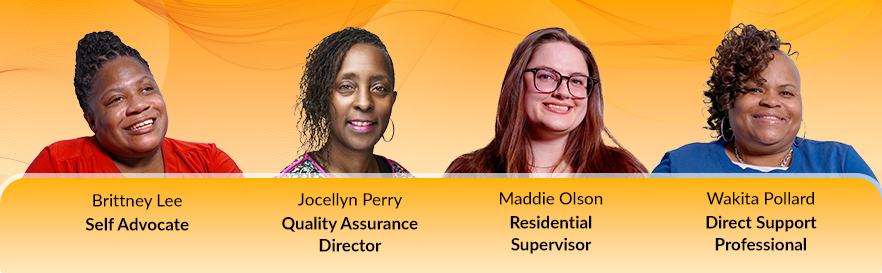
first agencies to adopt this tool. To share their experiences, three RRSI team members and a
self‑advocate
recently partnered with Therap to host a virtual panel.
Here are four key takeaways from the event on how videos can transform I/DD
documentation:
Staff use written records to learn about the individuals they support. Yet, traditional care plans
are frequently clinical and surface‑level, leaving team members with basic facts rather than a
true
sense of who a person is.
During the panel, Jeremy Robbins, Therap’s Director of Strategic Initiatives, noted, "Data tells us
what happened. But it's really personal stories that help us to understand why it matters." Video is
a great way to show those unique details and give staff a deeper understanding of the individual.
Whether it is showing how an individual likes their living space arranged or highlighting the daily
routines that make them feel most comfortable, these clips give valuable insights.
Maddie Olson, a Residential Supervisor at RRSI, has witnessed this benefit firsthand. She shared, "I
think seeing a video specific to each individual—it's humanizing. When you're reading data…you don't
have the real‑world connection to reference. In a video, you get a peek into their
personality."
In addition to helping staff better understand the people they support, video documentation also
offers an opportunity for individuals to have a voice in their own records. Therap’s “About Me”
Video feature serves as a platform for people to speak directly to their support teams about who
they are and what matters most to them.
Brittney Lee, a passionate self‑advocate who has received services at Richmond Residential for
over
15 years, spoke during the panel about why visual introductions are so powerful: "Videos help you
get to know an individual just the way they are," she said. For Lee, making an “About Me” Video was
a chance to share her story and encourage her peers to do the same. "It was all so fun to do. I
wanted people to know that you could do anything if you put your mind to it," she said.
Some aspects of daily support, such as unique communication styles and support techniques, are hard
to explain on paper. Adding videos to documentation allows instructions and examples to be
demonstrated to staff, helping them understand exactly how to interact with and assist an
individual. When staff are clear on these details, it promotes consistency in supports across all
team members
For RRSI, video documentation has been an effective way for staff to familiarize themselves with the
varying ways individuals communicate, including speaking, sign language, body language, or visual
aid cards. For example, they recorded a video of an individual and a trusted DSP interacting to show
exactly how the individual communicates in real time. Olson noted, "We're not speaking for
[individuals], we're speaking alongside them to make sure that their communication style is
integrated, but it can be easily understood by [staff] who may not be as familiar with them yet."
Video is also valuable for showing how to physically support individuals. Jocellyn Perry, RRSI’s
Quality Assurance Director, shared that the team made a video of an individual with multiple
sclerosis (MS) and their occupational therapist showing their falls prevention plan. "It was such a
meaningful and impactful video," Perry said. Wakita Pollard, a Direct Support Professional at RRSI,
agreed, noting that the video gives staff clear guidance on how to support safe movements and assist
the individual if a fall occurs. "If it weren't for the video, some people may not know, because
he's not going to just come out and tell you," Pollard said.
This wasn’t a checklist of what to do when an individual falls—it was a person showing staff exactly
how to support them when they need it. Perry shared, "It empowered this person to say, ‘I'm very
vulnerable when I fall and here's how I need support in my most vulnerable time in my apartment.’
There's no way that you could capture that essence in a document,” she said. “To get the very
essence of that in a video was priceless."
Incorporating videos into documentation is a powerful way to onboard and train employees. Many
people absorb and retain information better by watching a short video clip than reading pages of
text. Pollard recalled her initial excitement about video documentation for this exact reason,
noting, "I was excited for new staff coming in to be able to have something to actually visually see
what the clients need and want, as opposed to just reading it."
The benefits extend well beyond initial orientation. Perry emphasized that watching videos has been
helpful to all staff, regardless of the length of tenure. "We can go on and on about all of the
teaching and coaching that happens in real‑time in a video," she said. She believes
incorporating
this visual component is key to building a highly skilled team. "If you are asking your staff to
demonstrate person‑centered thinking and person‑centered interaction, the videos are
going to be a
tool to get them there and become more competent with understanding how to support individuals,"
Perry stated.
What began as a pilot project at RRSI has successfully transitioned into an operational standard. Perry
highlighted this commitment, stating, "For us, it's not a 'we would like to do it.' It's a 'have to.' It is
something that we will always have as a part of our enhanced case management processes at Richmond
Residential." Standardizing this practice ensures that the agency's records reflect the human element at the
core of their mission. Olson summarized the ultimate impact of this shift: "Video documentation is going to
be a way for people's light to really shine—for you to truly showcase that person‑centeredness and let
the
individuals speak for themselves."
For I/DD providers looking to adopt this visual approach, having the right system is essential. Therap’s
Secure Video Documentation module offers a streamlined, HIPAA-compliant way to record and upload clips
directly into agency files. Here are a few ways the tool can be used to enhance your daily documentation:
By adding these detail‑rich videos to documentation, provider agencies can create more comprehensive
records,
better equip their teams, and improve overall outcomes for the people they support.
Contact the Therap team today to get started.
Beyond Written Records: 4 Ways Therap’s Video
Documentation Empowers Staff and Individuals at Richmond Residential
Humanizing Documentation and Adding Context
Providing a Platform for Self-Advocacy
Clarifying Communication Styles and Support Needs
Enhancing Staff Onboarding and Training
Getting Started with Video Documentation
Ready to See the Impact of Video Documentation at Your
Agency?
Therap Blogs
Back to Main Blog