Evaluating a new Electronic Visit Verification (EVV) system is a major decision for service providers. For organizations working in the Intellectual and Developmental Disabilities field or Home and Community‑Based Services, choosing the right software requires careful consideration. The system needs to track service delivery accurately while supporting the complex workflows of human services professionals. With changing federal mandates and state‑specific compliance requirements, asking the right questions before switching EVV vendors can help your agency find a reliable partner that values the time of your direct support staff and administrators. Here are some questions your agency may want to consider: Many traditional electronic health records are designed for broad medical or behavioral health services. IDD and HCBS providers need systems tailored to their unique workflows, waiver requirements, and person‑centered care models. A specialized system reduces unnecessary administrative friction and aligns with the daily realities of direct support. Direct support professionals frequently deliver services in rural areas or community settings with poor cellular reception. It is vital to know if the mobile application can capture timestamps and location data securely without an active internet connection, syncing the data once the user returns online. A robust system should offer flexible, multi‑modal validation options. Ask potential vendors if they support digital signatures, secure voice recordings, or portal approvals from individuals receiving services or their family representatives. Connecting point‑of‑care service documentation directly to EVV data reduces manual data entry and minimizes errors. A unified system should seamlessly feed verified visit data into your billing module to generate clean claims based on tracked services. Protecting health information is a fundamental requirement. Inquire about how data is encrypted during transmission and whether protected health information is stored locally on mobile devices. A secure system maintains strict HIPAA compliance without creating barriers for authorized staff. State compliance often dictates that EVV data must be sent to specific state‑sponsored aggregators. Providers should verify that the software can transmit visit data directly to these required databases, eliminating the need for staff to enter the same data multiple times into different portals. Software is only effective if your team can use it easily. Direct support professionals need intuitive tools that fit naturally into their daily routines. Evaluating the user experience of the mobile application helps organizations maintain high staff adoption rates and reduce the time spent on training. For administrative staff, collecting data is only half the battle; they also need efficient ways to analyze it. A strong EVV system should provide comprehensive reporting tools and centralized dashboards that allow managers to easily review staff visit data. Supervisors need real‑time visibility to monitor check‑ins and check‑outs, identify missed or late shifts, and resolve exceptions before billing. Robust reporting capabilities empower agencies to proactively manage compliance, audit staff performance, and streamline overall operations. For agencies seeking a robust, compliant, and user‑friendly platform, Therap Services provides a mobile‑friendly EVV solution designed specifically for HCBS and IDD providers. Therap understands that documenting care should not detract from delivering it. The platform captures real‑time GPS coordinates, accurate timestamps, and multi‑modal verifications, directly connecting service documentation to EVV data for streamlined compliance. Therap addresses the unique challenges of community‑based support by offering a highly capable offline mode. Staff can record check‑ins, check‑outs, and documentation in remote areas and easily upload completed data when they connect to the internet. To protect sensitive information, Therap maintains strict security protocols, including encrypted data transmissions and zero local storage of protected health information on mobile devices. Additionally, Therap empowers administrators with robust reporting and dashboard capabilities. Managers can seamlessly review staff EVV data, track visit statuses in real time, and easily identify any discrepancies or exceptions, ensuring quality oversight and simplifying audits. By eliminating disjointed tracking systems and paper sign‑off sheets, Therap helps reduce administrative burnout. Verified EVV data seamlessly feeds into Therap’s billing workflows, helping agencies accelerate reimbursements and reduce denied claims. The system also transmits data to state‑mandated aggregators, supporting compliance with the 21st Century Cures Act. Contact Therap team today to explore our comprehensive documentation solutions. Therap builds tools specifically for IDD and HCBS providers. Instead of retrofitting a hospital or clinical system, Therap integrates visit verification directly into person‑centered documentation and tailored billing workflows that match the daily operations of human services agencies. Yes. The Therap mobile app includes an offline mode that allows staff to record check‑ins, check‑outs, and necessary documentation even when cellular service is unavailable. The data is securely stored and automatically uploaded once the device regains an internet connection. Therap captures required data points such as the service performed, location, time, and the staff member providing the service. Therap also transmits this visit data to state‑mandated aggregators to facilitate compliance with the 21st Century Cures Act while reducing duplicate data entry. Therap supports multi‑modal validation. Agencies can capture digital signatures or use secure voice recordings from the individuals receiving support or their family representatives, accommodating different abilities and preferences. Therap provides centralized reporting tools and dashboards that give administrators real‑time visibility into staff visits. Managers can easily track check‑ins, resolve exceptions, and pull detailed reports to review service delivery and agency‑wide compliance. Choosing an EVV System for IDD and HCBS Services: 8 Questions to Ask Before You Switch Vendors
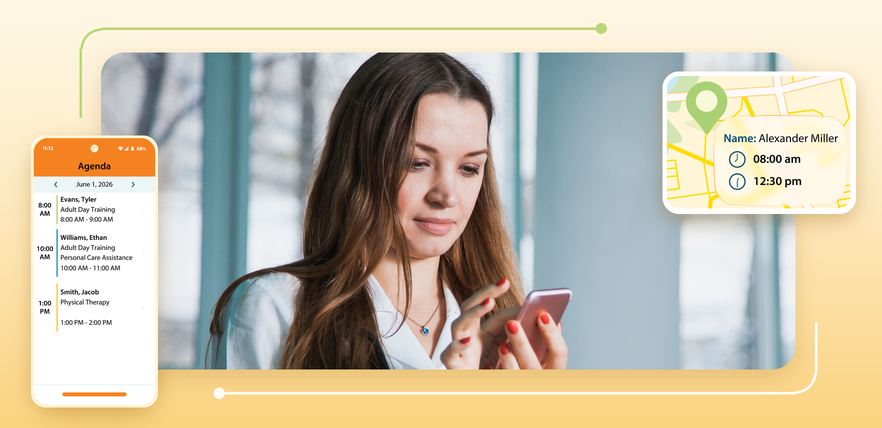
Therap’s Integrated EVV Solution for Human Services Providers
Ready to See How a Specialized EVV System Can Support Your Agency's Goals?
Frequently Asked Questions
What makes Therap’s EVV solution different from standard medical tracking systems?
Can the Therap solution work in areas with poor internet connection?
How does Therap help agencies comply with federal mandates?
Does Therap offer flexible ways for individuals to verify their services?
How can managers and supervisors review EVV data in Therap?

