Transitioning to a new documentation system is a major decision for any provider in the intellectual and developmental disabilities (IDD) field. The right software streamlines operations and empowers your staff, while the wrong choice creates friction and administrative burdens. To help your agency evaluate options objectively, we compiled a buyer's checklist. Ask these 12 questions before making a switch. First, protecting sensitive health information is a fundamental requirement. Your software needs to meet strict security standards without creating barriers for authorized users. Begin by asking: Beyond security, software is only effective if your team can use it easily. Direct support professionals need intuitive tools that fit naturally into their daily routines. Consider these functional aspects: Once data is securely and easily entered, that data should work for your agency, helping you track outcomes and streamline administrative tasks. Ask potential vendors about their data management capabilities: The transition period itself requires guidance. A software vendor should act as a partner during the setup phase and beyond, meaning you need to evaluate their reliability: Finally, budgeting for new software requires looking past the initial sticker price to understand the long‑term financial impact. Ask these financial questions to avoid surprises: Evaluating these twelve questions frequently reveals gaps in generic health record systems. This is where a dedicated solution like Therap Services stands out. Built specifically for the IDD and human services fields, Therap addresses each point on the buyer's checklist with robust, purpose‑built features. When you evaluate security, Therap provides a comprehensive, secure platform designed to maintain HIPAA compliance. Data is protected with rigorous access controls, giving agency administrators the power to define exactly what information specific staff members can view or edit. This keeps data secure while allowing the right people to access necessary information. For usability and ease of access, Therap offers intuitive applications that allow direct support professionals to document care at the point of service. This means fewer hours spent at a desk and more time dedicated to person‑centered support. Staff can even leverage the Therap Mobile App innovative tools to document on the go. Reporting is another area where Therap excels. The system includes powerful data analytics tools that turn daily documentation into actionable insights. Agencies can generate reports for internal quality checks or state compliance audits with minimal effort. This visibility helps supervisors spot trends, monitor health outcomes, and improve service delivery. Therap also provides unmatched support. Our team understands the nuances of IDD agencies because many of our professionals have direct experience in the field. We guide you through data migration, system configuration, and staff training, and continue to offer reliable assistance whether you’ve used Therap for ten days or ten years. Lastly, Therap provides a transparent cost structure without surprise fees. Pricing is based on just two factors: how many people your agency serves and how many modules you choose to turn on. Because Therap is priced per individual supported per year, rather than per user, you can give access to as many team members as you need at no extra cost, keeping your entire organization connected and informed. Book a Demo with the Therap team today to explore our comprehensive documentation software. Standard medical systems focus heavily on clinical episodes and billing for acute care. IDD software like Therap focuses on long‑term, person‑centered support, habilitation goals, behavioral tracking, and daily living documentation. The timeline varies based on agency size and data complexity. Therap works closely with agencies to create a structured implementation timeline that minimizes disruption to daily services and provides adequate time for staff training. Yes. Providing staff with intuitive mobile tools reduces the administrative burden of end‑of‑shift paperwork. Systems like Therap allow staff to document easily on the go, which can reduce burnout and improve overall job satisfaction. A robust documentation system simplifies the audit process by keeping records organized, timestamped, and easily searchable. Therap features comprehensive reporting tools designed to generate the specific data state auditors look for during reviews. The IDD Documentation Software Buyer's Checklist: 12 Questions to Ask Before You Switch
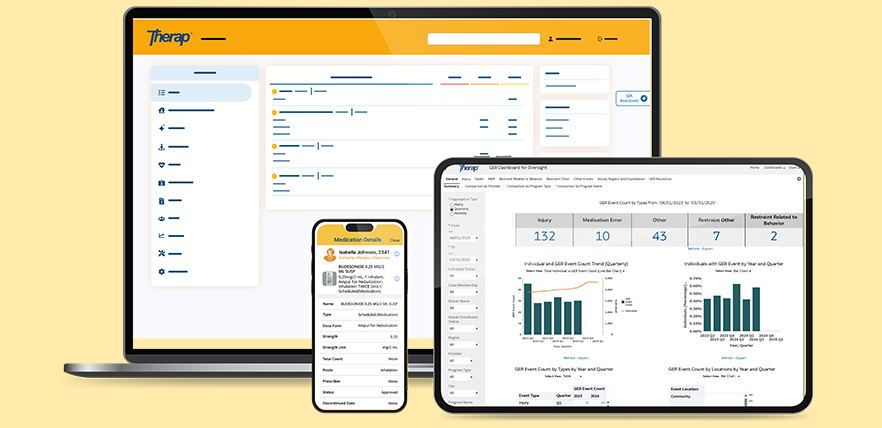
How Therap Services Meets the Mark
Ready to See How Therap Can Check All of the Boxes
for Your Agency's Specific Needs? Frequently Asked Questions
What makes an IDD software different from standard medical record systems?
How long does it take to switch to a new documentation system?
Can mobile documentation improve staff retention?
Does the software help with state compliance audits?

